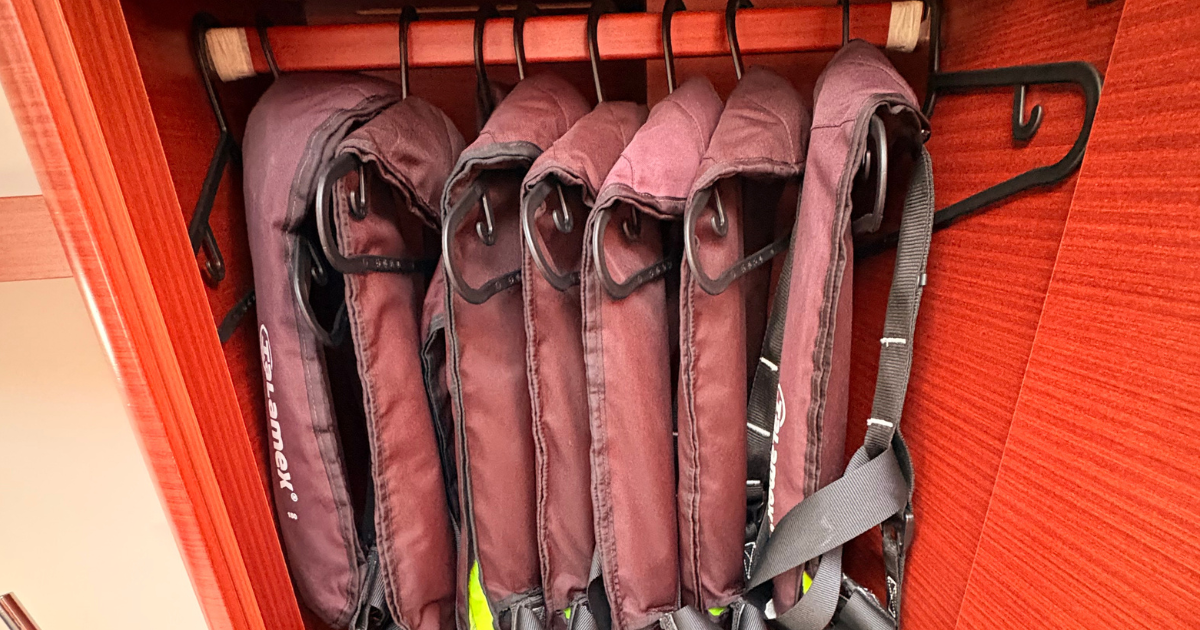
For most of us, the sailing season is over. The boat is ashore or in winter storage, the sails are off and the lifejacket… is often still lying in a locker on board or in the boot of the car.
A shame, because an inflatable lifejacket doesn't like being damp and forgotten. Storing your lifejacket for the winter takes just half an hour, and it will be ready to go again straight away in spring.
1. Get rid of salt and dirt, but not under the tap
Salt attracts moisture and over time causes corrosion on the CO₂ cylinder and the firing mechanism. Wipe the outside of your lifejacket with a damp cloth and fresh water.
Don't rinse your lifejacket with the garden hose or under the tap, and certainly don't put it in the washing machine. Many lifejackets use a bobbin or a hydrostatic firing head that reacts to water. A lifejacket you rinse can simply inflate.
2. Let it dry properly
Hang your lifejacket open on a clothes hanger in a dry place at room temperature. Not on the radiator and not in full sun. Only close it again once it is completely dry.
A lifejacket stored wet quickly gets mould and stains. Unfortunately, we still see that far too often in the workshop.
3. A quick check yourself
While the lifejacket is open anyway, it's a good moment to check a few things:
- CO₂ cylinder: is it screwed in tightly and free of rust? A rusty cylinder must be replaced.
- Indicator: are all indicators on the firing mechanism showing correctly?
- Bobbin or firing head: has the expiry date not passed?
- Light: does it still work? Lights are often forgotten until you really need them.
- Straps, buckles and crotch straps: no fraying, tears or broken fastenings?
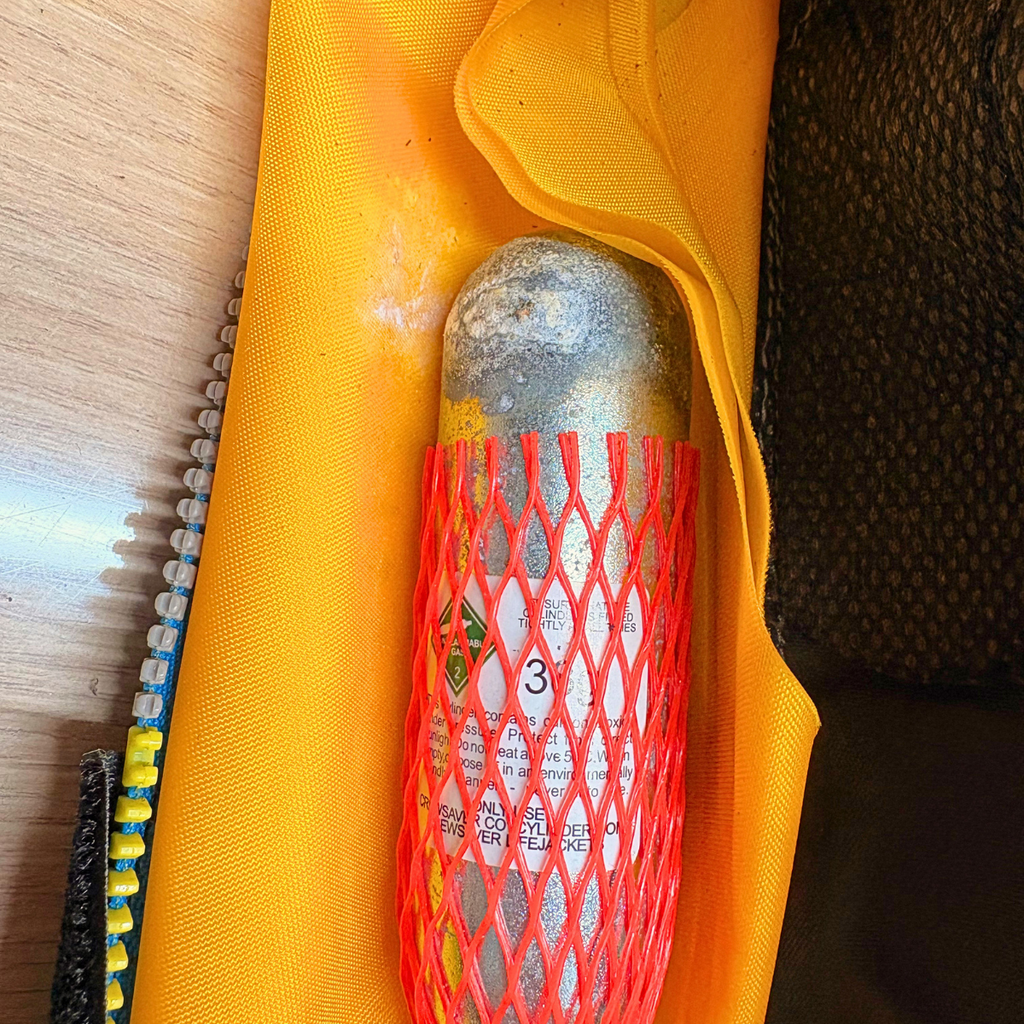
In doubt about anything? Then better not inflate the lifejacket yourself, and have it checked.
4. Store it correctly
The best place for your lifejacket in winter is dry, frost-free and well ventilated. Ideally hang it on a hanger in a cupboard or storeroom at home. Don't leave it in a damp cabin or a closed locker on board, and don't put heavy things on top of it.
Do you also sail in winter?
Not everyone lays up the boat in winter. If you do go out on the water, don't leave your lifejacket hanging in the cupboard. At sea, wearing a lifejacket is even mandatory for recreational sailors from 16 October to 15 May. The water is very cold in this period, and a fall overboard quickly becomes dangerous due to cold shock and hypothermia.
Check your lifejacket before you leave and hang it open to dry again after every trip. More about mandatory equipment on board can be found at the Belgian Federal Public Service Mobility and Transport. In our article on when a buoyancy aid or lifejacket is required you'll find all the rules set out.
5. Winter is the ideal time for a service
In spring everyone wants their lifejacket serviced at the same time, just when you actually want to get out on the water. In winter it's quieter, and your lifejacket is guaranteed to be ready on time.
During a service your lifejacket is fully checked: general condition, firing mechanism, CO₂ cylinder, oral inflation tube and accessories. Depending on the brand, a 12 to 16-hour pressure and leak test follows. Once it passes, you receive a service report and certificate.
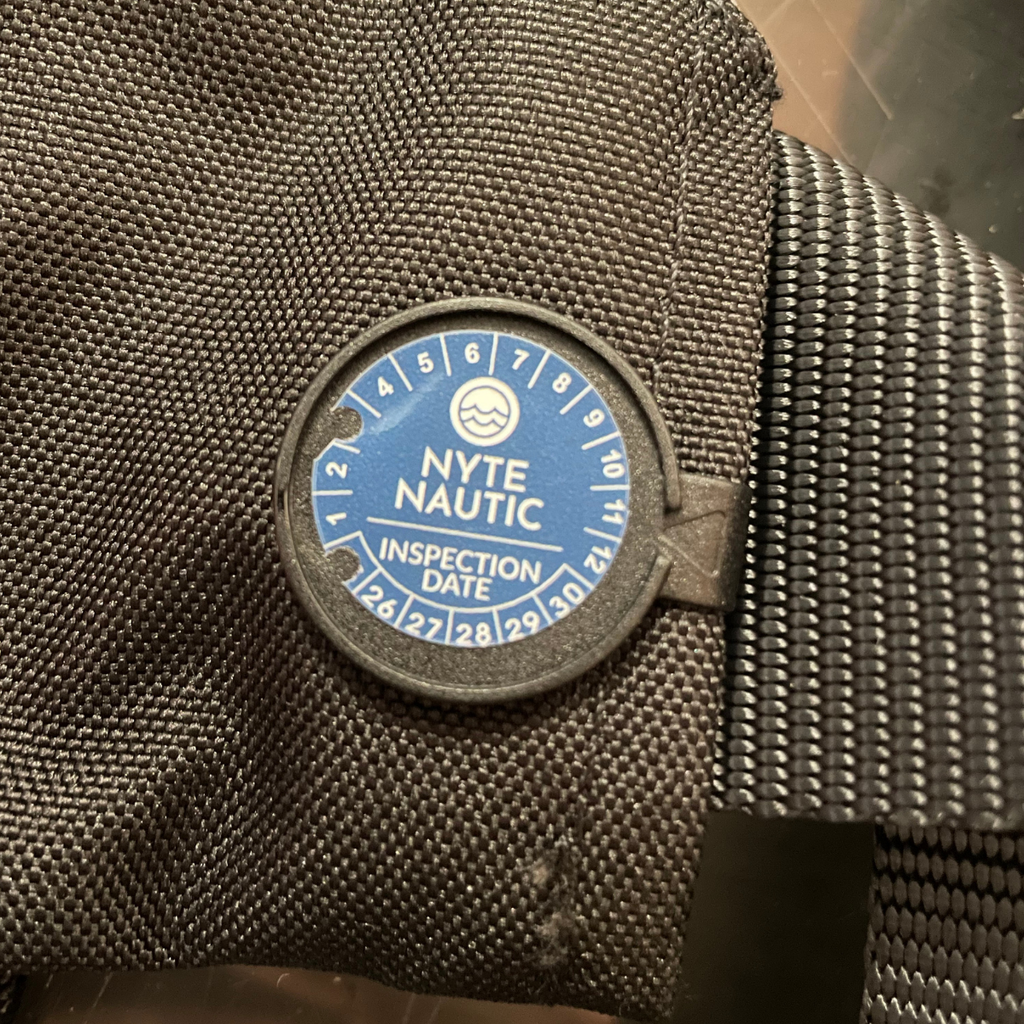
Always follow the service interval set by the manufacturer of your lifejacket. If you use the lifejacket commercially or professionally, for example for hire or sailing lessons, then according to the Belgian Federal Public Service Mobility it must be inspected every year by an approved body.
You can drop off your lifejackets via the 24/7 box in Stabroek (by appointment), but we can also collect and return them. Feel free to contact us first, and we'll work out together what suits you best.
Or send a message via WhatsApp (+32 456 89 30 87) or email info@nytenautic.be.
Have a good winter, and see you on the water in spring!
Timmy, Nyte Nautic